

Table of Contents
Installing the NVIDIA driver on Arch Linux ensures your GPU runs efficiently and supports the latest features. This guide provides a clear, SEO-friendly, and easy-to-follow method suitable for both new and experienced users.
Step 1: Update the System
Keeping your system updated prevents compatibility issues during installation. Always start with the latest packages to ensure smooth NVIDIA driver setup.
sudo pacman -Syu
System in the style of your previous articles:
sudo pacman -S base-devel linux-headers
Step 2: Identify Your NVIDIA GPU
Before installing, confirm your GPU model to install the correct driver version. This avoids conflicts with unsupported hardware.
lspci | grep -i nvidia
Use this command to list NVIDIA GPU details for driver selection:
nvidia-detect
Step 3: Install NVIDIA Driver
Install the official NVIDIA driver package from the Arch repository. For most modern GPUs, the nvidia package is recommended, while older GPUs may require nvidia-390xx.
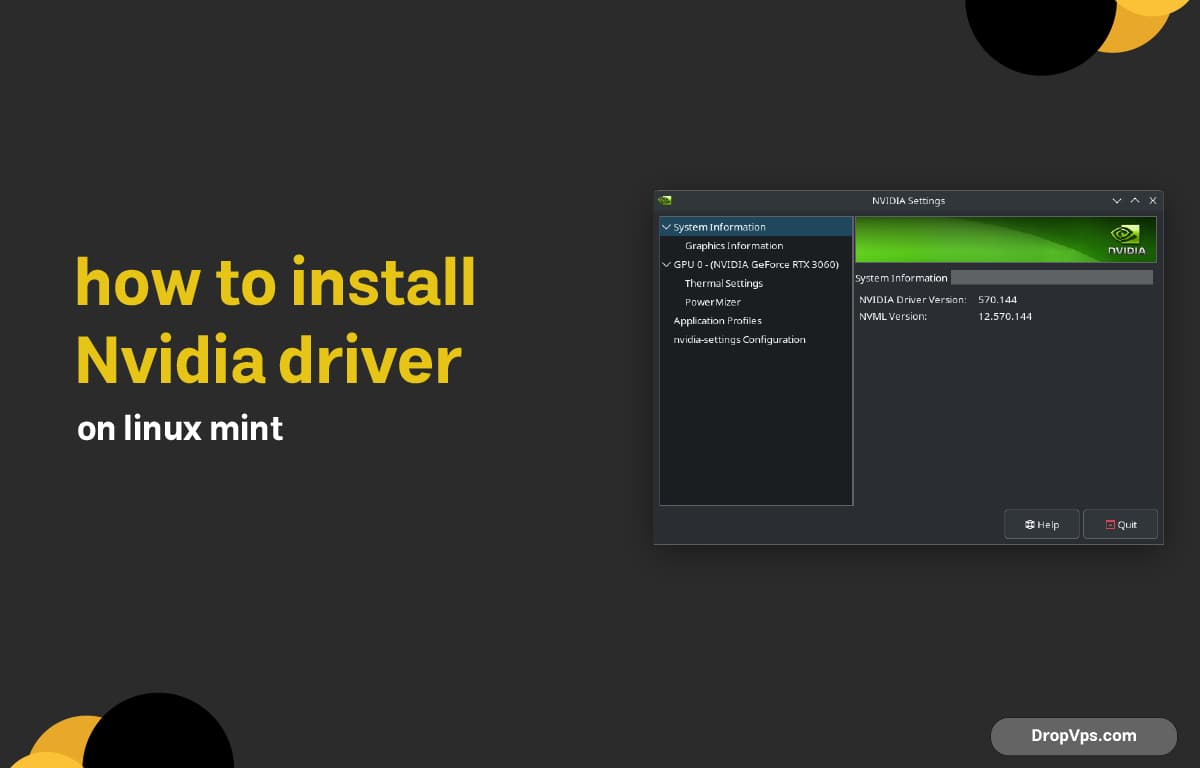
sudo pacman -S nvidia nvidia-utils nvidia-settings
Quickly check which NVIDIA GPU is installed on your system:
lspci | grep -i nvidia
Step 4: Blacklist Nouveau
The open-source Nouveau driver can conflict with the NVIDIA driver. Blacklist it to prevent startup issues.
echo "blacklist nouveau" | sudo tee /etc/modprobe.d/blacklist-nouveau.conf
Temporarily disable the default Nouveau driver to avoid conflicts:
sudo nano /etc/modprobe.d/blacklist-nouveau.conf
Step 5: Reboot the System
A reboot applies changes and loads the NVIDIA kernel modules properly, ensuring the driver is active.
sudo reboot
ChatGPT said:
Check if the NVIDIA driver is correctly loaded and active:
nvidia-smi
Step 7: Troubleshoot Common Issues
If the NVIDIA driver does not work as expected, it’s important to identify common problems such as driver conflicts, missing dependencies, or incorrect kernel modules. This ensures your GPU performs optimally.
dmesg | grep -i nvidia
Follow DropVPS on Google
Add DropVPS as a preferred source to see our latest VPS guides and tutorials surfaced first in Google Search and AI Overviews.
Need a Linux Server for This?
Run Debian, Ubuntu, or any Linux distro on DropVPS — fast NVMe SSD, full root access, and 24/7 support. Perfect for everything you just read.
- Full Root Access
- Debian & Ubuntu Ready
- 99.99% Uptime
- 24/7 Support
No commitment · Cancel anytime