Blog
Explore our handpicked selection of featured properties. Each listing offers a glimpse into exceptional homes and investments available through Estatein. Click "View Details" for more information.

How to check PyTorch version?
What you will read?1 Method 1: Using Python Script2 Method 2: Using Command Line3 Method 3: Using Jupyter Notebook4 Method 4: Using Pip5 Conclusion To check the version of PyTorch installed in your environment, you can use one of the following methods. Choose the one that suits your setup best. Method 1: Using Python Script…

how install pip on windows vps
What you will read?1 Prerequisites2 Step 1: Verify Python Installation3 Step 2: Download get-pip.py4 Step 3: Run get-pip.py5 Step 4: Verify pip Installation6 Step 5: Add pip to PATH (if necessary)7 Step 6: Restart Command Prompt8 Conclusion Pip is the package installer for Python, allowing you to install and manage additional packages that are not part of…

How to install Django on CentOS 7
What you will read?1 Prerequisites2 Step 1: Update Your System3 Step 2: Install Required Packages4 Step 3: Install Virtual Environment5 Step 4: Create a Virtual Environment6 Step 5: Install Django7 Step 6: Create a New Django Project8 Step 7: Configure the Database9 Step 8: Migrate the Database10 Step 9: Create a Superuser11 Step 10: Run…

How to set proxy for Docker in Ubuntu?
What you will read?1 Step 1: Identify Your Proxy Server2 Step 2: Configure Docker to Use the Proxy3 Step 3: Testing Your Proxy Configuration Configuring Docker to use a proxy server is essential in environments where direct internet access is restricted or when you need to route traffic through a specific proxy. In this guide,…

How to set proxy for cURL in Ubuntu?
What you will read?1 Step 1: Identify Your Proxy Server2 Step 2: Using cURL with Proxy3 Step 3: Setting Environment Variables (Optional)4 Step 4: Testing Your Configuration cURL is a powerful command-line tool used for transferring data with URLs. It supports various protocols and can be configured to use a proxy server for its requests.…
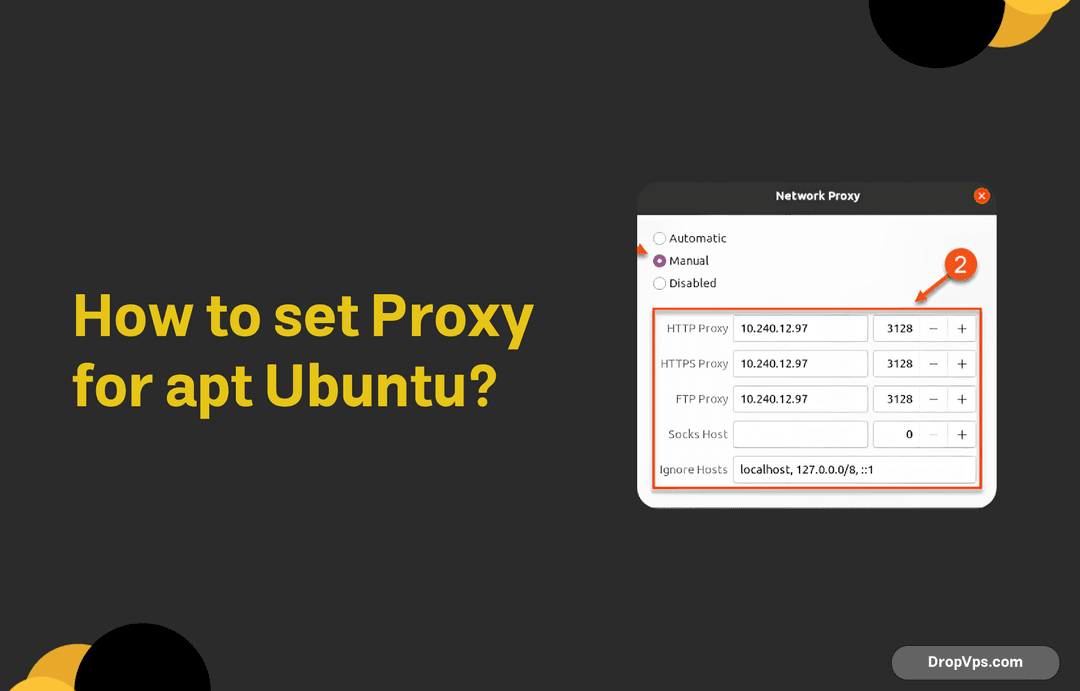
How to set proxy for apt ubuntu?
What you will read?1 Step 1: Identify Your Proxy Server2 Step 2: Configure APT to Use the Proxy3 Step 3: Save and Exit4 Step 4: Update APT and Install Packages5 Step 5: Testing Your Configuration Setting a proxy for APT (Advanced Package Tool) in Ubuntu is a straightforward process that allows you to download packages…

how to setup proxy in ubuntu?
What you will read?1 Step 1: Install Required Packages2 Step 2: Configure the Proxy Server3 Step 3: Start and Enable the Proxy Server4 Step 4: Configure Your System to Use the Proxy5 Step 5: Testing Your Proxy Setting up a proxy server in Ubuntu can enhance your browsing experience by providing anonymity, improving security, and…
How to get proxy settings in cmd?
What you will read?1 Method 1: Setting Up a Proxy Server with Squid (Linux)2 Method 2: Setting Up a Proxy Server with CCProxy (Windows) Creating your own proxy server can be a great way to learn about networking and enhance your internet privacy or bypass restrictions. Here’s a step-by-step guide on how to set up…

How do I create my own proxy server?
What you will read?1 Method 1: Using netsh2 Method 2: Using reg query3 Method 3: Using powershell To retrieve proxy settings using the Command Prompt (CMD) in Windows, you can use several commands and methods. Here are the most common approaches: Method 1: Using netsh The netsh command can be used to view the current proxy settings configured in…