

Table of Contents
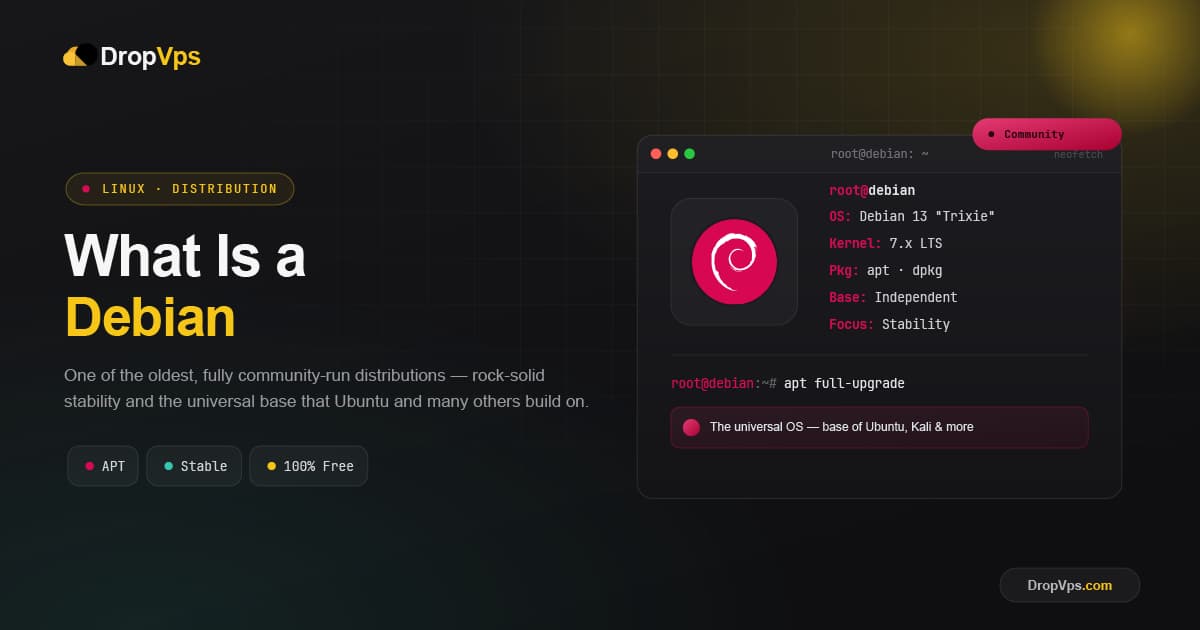
Debian is a free, community-driven Linux operating system known for being extremely stable, secure, and reliable. It is one of the oldest and most respected Linux distributions, and it serves as the foundation for many others, including Ubuntu and Linux Mint.
Debian is built entirely by volunteers organized as the Debian Project, with no single company behind it. Its strict focus on stability and free software has made it a favorite for servers, where predictable, long-lasting systems matter more than having the newest features.
Quick Facts
| Developer | The Debian Project (community) |
| First released | 1993 |
| Latest stable version | Debian 13 (Trixie) |
| Package manager | APT (.deb packages) |
| Cost | Free and open source |
Why Debian Is So Trusted
Debian's reputation comes from its careful, conservative approach. Packages are tested heavily before they reach the stable release, so a Debian server can run for years with minimal surprises. It also supports a very wide range of hardware architectures, from everyday servers to specialized devices.
Debian Release Branches
Debian always maintains three branches at once, so you can choose how new you want your software:
- Stable: The production-ready release, recommended for servers. The current stable version is Debian 13 "Trixie", first released in August 2025.
- Testing: The next release in preparation, with newer packages that are mostly stable.
- Unstable (Sid): The development branch with the newest software, aimed at developers.
Each stable release is supported for about 5 years when you include Long Term Support, which is part of why Debian is popular for long-running servers.
Key Features of Debian
- Rock-solid stability: Heavily tested packages built for years of uptime.
- Strong security: A dedicated security team and timely patches.
- Huge package repository: Tens of thousands of free software packages through APT.
- Truly independent: Run by a non-profit community, not a single vendor.
- Wide architecture support: Runs on many CPU types beyond standard x86.
Debian vs Ubuntu
Ubuntu is actually built on Debian. The main difference is that Debian prioritizes stability and free software with a slower release pace, while Ubuntu adds newer software, a polished desktop, and commercial support on a fixed six-month and LTS schedule. Choose Debian when you want maximum stability and control; choose Ubuntu when you want newer features and an easier out-of-the-box experience.
What Debian Is Used For
- Web and application servers that need long, stable uptime.
- VPS and cloud hosting: Debian is a lightweight, dependable base for a Linux VPS.
- Databases and infrastructure where reliability is critical.
- A base for other systems, including Ubuntu, Linux Mint, and many appliances.
Debian 13 (Trixie)
Download the latest stable Debian release directly from the Debian Project.
Download from Official Website →Closing Thoughts
Debian is the quiet workhorse of the Linux world: free, independent, and famous for stability that lasts for years. With Debian 13 "Trixie" as the current stable release, it remains a top choice for servers and the foundation that much of the Linux ecosystem is built on.

Follow DropVPS on Google
Add DropVPS as a preferred source to see our latest VPS guides and tutorials surfaced first in Google Search and AI Overviews.
Need a Linux Server for This?
Run Debian, Ubuntu, or any Linux distro on DropVPS — fast NVMe SSD, full root access, and 24/7 support. Perfect for everything you just read.
- Full Root Access
- Debian & Ubuntu Ready
- 99.99% Uptime
- 24/7 Support
No commitment · Cancel anytime